
Introduction
Swimming pool waterproofing is a crucial process that ensures a swimming pool remains leak-free, durable, and safe for use over the years. Without proper waterproofing, pools are vulnerable to water leakage, structural damage, algae growth, and costly repairs. In India, where varying weather conditions and high water table levels pose unique challenges, effective waterproofing is an essential component of both new construction and renovation projects.
In this guide by Swimwell Pools, we explain what swimming pool waterproofing involves, why it is important, the types of waterproofing solutions available, and how it integrates with overall pool construction and maintenance.
Understanding Swimming Pool Waterproofing
Swimming pool waterproofing involves applying specialized materials and techniques to prevent water from seeping through the pool structure. This protects concrete, plaster, tiles, and surrounding areas from moisture damage, which can compromise structural integrity over time.
Key objectives of waterproofing include:
Preventing leaks and seepage
Protecting structural components
Reducing the growth of algae and mold
Extending the pool’s lifespan
Proper waterproofing is not only about applying coatings—it requires a comprehensive approach, including surface preparation, crack repairs, and correct material application.
Why Swimming Pool Waterproofing Is Important
Waterproofing plays a vital role in the longevity and functionality of a pool. Without it, pools may experience:
Water Leakage: Seepage into the foundation or surrounding soil can lead to serious structural problems.
Tile and Plaster Damage: Moisture penetration causes tiles to loosen and plaster to deteriorate.
Algae Growth: Leaks and damp surfaces create ideal conditions for algae and bacteria.
Structural Weakness: Continuous water exposure can cause cracks and corrosion in reinforcement.
By implementing effective swimming pool waterproofing, pool owners can prevent these issues and maintain a safe and attractive swimming environment.
Types of Swimming Pool Waterproofing Solutions
There are several methods of waterproofing, each suitable for different pool structures and materials.
1. Cementitious Waterproofing
Common for concrete and masonry pools
Easy to apply and cost-effective
Forms a protective layer that prevents water penetration
2. Liquid Membrane Waterproofing
Applied as a liquid coating that hardens into a seamless membrane
Flexible and suitable for pools with irregular shapes
Offers excellent adhesion to concrete surfaces
3. Sheet Membrane Waterproofing
Prefabricated sheets applied to pool surfaces
Durable and resistant to chemical exposure
Requires precise installation to avoid seams and gaps
4. Crystalline Waterproofing
Chemicals penetrate concrete and form crystals inside cracks and pores
Provides long-lasting protection
Ideal for pools exposed to high water pressure or heavy use
A professional swimming pool waterproofing service evaluates the pool structure and recommends the best solution for long-term performance.
Steps Involved in Swimming Pool Waterproofing
Effective waterproofing requires a systematic approach. The typical process includes:
Surface Inspection and Cleaning
Removing dust, debris, loose plaster, or old coatings
Crack Repair
Filling cracks and structural gaps to prevent leaks
Primer Application
Ensures adhesion of waterproofing layers
Waterproofing Application
Applying the selected material uniformly
Curing and Testing
Allowing sufficient time for materials to set
Conducting water retention tests to ensure effectiveness
Following these steps ensures a durable, leak-proof pool.
Role of Waterproofing in Pool Maintenance
Waterproofing is not a one-time concern. Over time, wear, chemical exposure, and environmental conditions can reduce its effectiveness. Regular maintenance and periodic inspections help:
Identify minor leaks early
Prevent large-scale structural damage
Maintain water quality
Extend the lifespan of tiles, plaster, and pool structure
Swimming pool waterproofing is a proactive step that reduces long-term maintenance challenges.
How Waterproofing Integrates With Swimming Pool Construction
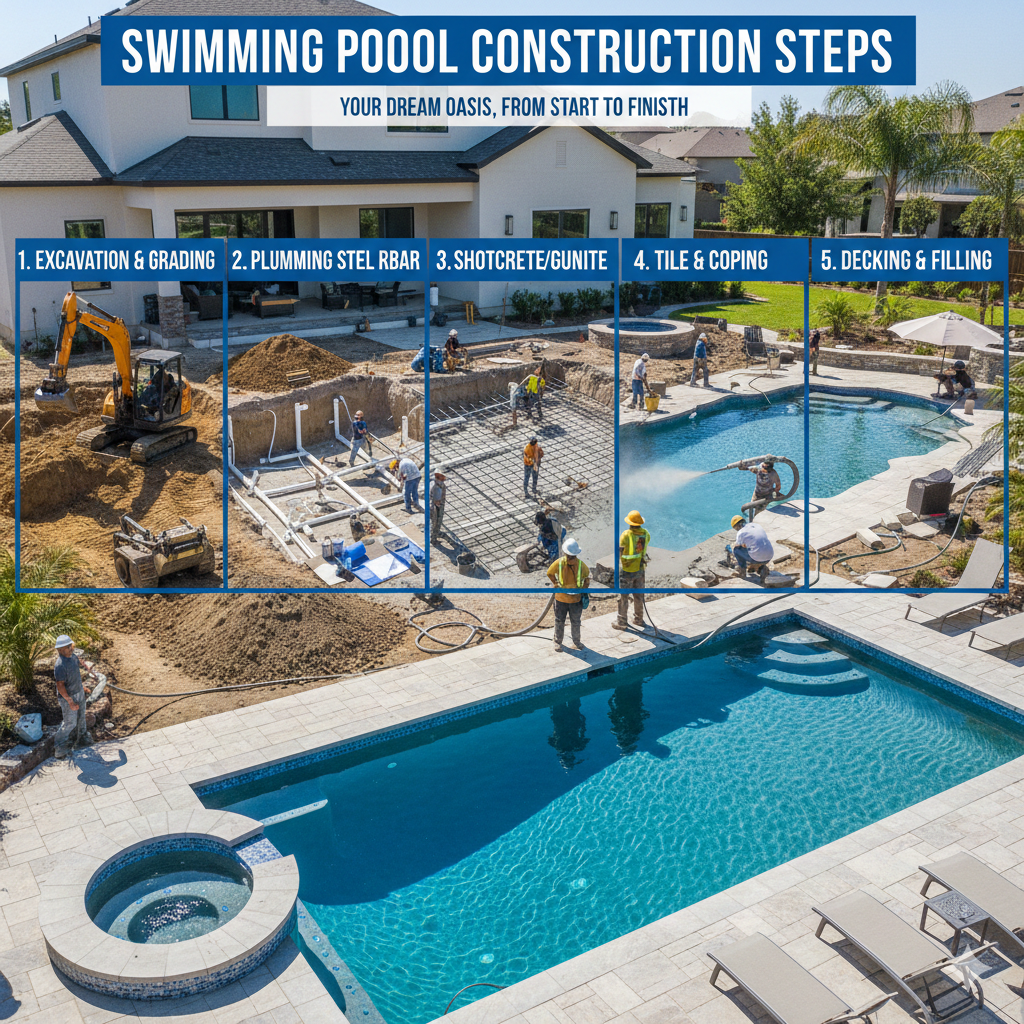
In new swimming pool construction, waterproofing is applied during the construction phase to ensure structural integrity from the outset. Integrating waterproofing with construction allows for:
Seamless adhesion to fresh concrete and plaster
Prevention of early-stage leaks
Optimized water circulation without seepage
Professional teams ensure waterproofing complements the design, layout, and filtration systems, enhancing both safety and longevity.
Waterproofing for Existing Pools
Older pools often require waterproofing during renovation or resurfacing. Common signs that an existing pool needs waterproofing include:
Persistent water loss
Cracks in plaster or concrete
Loose or damaged tiles
Algae or mold in damp areas
Professional waterproofing solutions restore structural integrity and improve overall water hygiene.
Common Mistakes to Avoid in Pool Waterproofing
For effective waterproofing, avoid these errors:
Skipping surface preparation
Using low-quality materials
Improper curing
Ignoring cracks and structural issues
DIY application without professional guidance
A professional swimming pool waterproofing service ensures all steps are correctly executed for lasting results.
Benefits of Professional Swimming Pool Waterproofing
Hiring a professional offers multiple advantages:
Expert Material Selection – Choosing the right waterproofing solution based on pool type and location.
Long-Term Protection – Prevents leaks, cracks, and structural damage.
Enhanced Safety and Hygiene – Minimizes algae growth and chemical imbalance.
Cost-Efficient Maintenance – Reduces the need for frequent repairs and resurfacing.
Durable Finish – Ensures smooth surfaces and improved aesthetics.
Professional application maximizes the lifespan and functionality of the pool.
Waterproofing Considerations for Indian Climate
India’s climate presents unique challenges for pools:
Monsoon Rain: Heavy rains increase hydrostatic pressure on pool walls.
High Temperatures: Accelerates chemical reactions and surface wear.
Humidity: Affects curing times of waterproofing materials.
Professional teams adapt waterproofing techniques to local conditions, ensuring long-lasting protection against environmental stresses.
Swimming Pool Waterproofing and Water Quality
Effective waterproofing indirectly improves water quality by:
Preventing water leakage and stagnation
Minimizing cracks that harbor algae and bacteria
Maintaining consistent chemical balance
Reducing maintenance interventions
A well-waterproofed pool requires less frequent chemical treatment and stays cleaner over time.
Choosing the Right Swimming Pool Waterproofing Service
A professional service like Swimwell Pools provides:
Comprehensive pool inspection
Customized waterproofing solutions
Expert application and curing techniques
Integration with construction or renovation plans
Long-term maintenance advice
This ensures the pool remains structurally sound, leak-free, and hygienic for years.
Conclusion
Swimming pool waterproofing is essential for protecting pool structures, improving water quality, and extending the lifespan of a swimming pool. Whether for new construction or renovation, professional waterproofing prevents leaks, reduces maintenance challenges, and enhances swimmer safety.
When planning swimming pool construction cost India, it is crucial to include professional waterproofing as part of the project. Partnering with a reliable swimming pool company like Swimwell Pools ensures expert application, long-lasting results, and a safe, visually appealing pool.
Frequently Asked Questions (FAQ)
1. What is swimming pool waterproofing?
It is the process of applying materials and techniques to prevent water leakage and protect the pool structure.
2. Why is waterproofing important for pools?
It prevents leaks, structural damage, algae growth, and reduces maintenance requirements.
3. Can waterproofing improve water quality?
Yes, it minimizes cracks and stagnant water, helping maintain cleaner water.
4. What types of waterproofing are used in pools?
Common types include cementitious, liquid membrane, sheet membrane, and crystalline waterproofing.
5. Can existing pools be waterproofed?
Yes, renovation and resurfacing projects often include professional waterproofing.
Read Our Previous Blog------------->Can a swimming pool consultant help with permits and approvals?


Write a comment ...